Monday, January 28, 2013

What's making news in nutrition this month?

Berries may cut heart attack risk in women

The Journal of American Heart Association reported women who ate a minimum of 3 servings of blueberries and strawberries a week had 1/3 of the heart attacks, compared to those who ate berries once a month or less. The results were gathered from food questionnaires and adjusted for other risk factors for heart attacks such as age, blood pressure, family history, weight, smoking, exercise and alcohol intake.

The reason is likely due to the high flavonoid (antioxidant) content of blueberries and strawberries. This research supports the Australia Dietary Guidelines to include 2 serves of fruit each day. Why not try making one of these serves of fruit blueberries or strawberries?

Australia's Healthy Weight Week

20-27 Jan was Australia's Healthy Weight Week, run by the Dietitians Association of Australia, to raise awareness of the importance of a healthy lifestyle. This years event focused on fad free diets. Steer away from diets that promise rapid weight loss. A realistic and healthy weight loss goal is 0.5-1kg per week.

Fad free diets encourage starting the day with breakfast, including all five food groups and filling up on low kilojoule/ high nutrient foods such as fruits, vegetables, lean meats, fish, legumes, nuts and low fat dairy.

What is the DASH diet?

The DASH diet stands for Dietary Approaches to Stop Hypertension. The US News & World Report recently ranked the DASH diet as the number 1 diet. Although the diet is designed to lower blood pressure; it is also a well balanced diet for people in general. The principles of the DASH diet are to eat lots of fruits, vegetables, wholegrains, low fat dairy foods, as well as chicken, fish, nuts and beans. Foods kept to a minimum include red meat, processed foods, sugar laden drinks and foods. It is low in salt and high in magnesium, calcium and potassium.


Aged Garlic Extract lowers Blood Pressure 

A study published in the European Journal of Clinical Nutrition showed aged garlic extract as an effective way to lower blood pressure in individuals on blood pressure medication. The response was seen in participants who took two capsules of aged garlic extract a day. Systolic blood pressure was reduced by about 12mmHg in the study.

The same results are not seen from using garlic cloves in cooking, as there is a different active ingredient in the aged garlic extract. Garlic does have many health benefits though including anti-bacterial, anti-viral and anti-inflammatory!

Tuesday, December 4, 2012

Summer = Salads

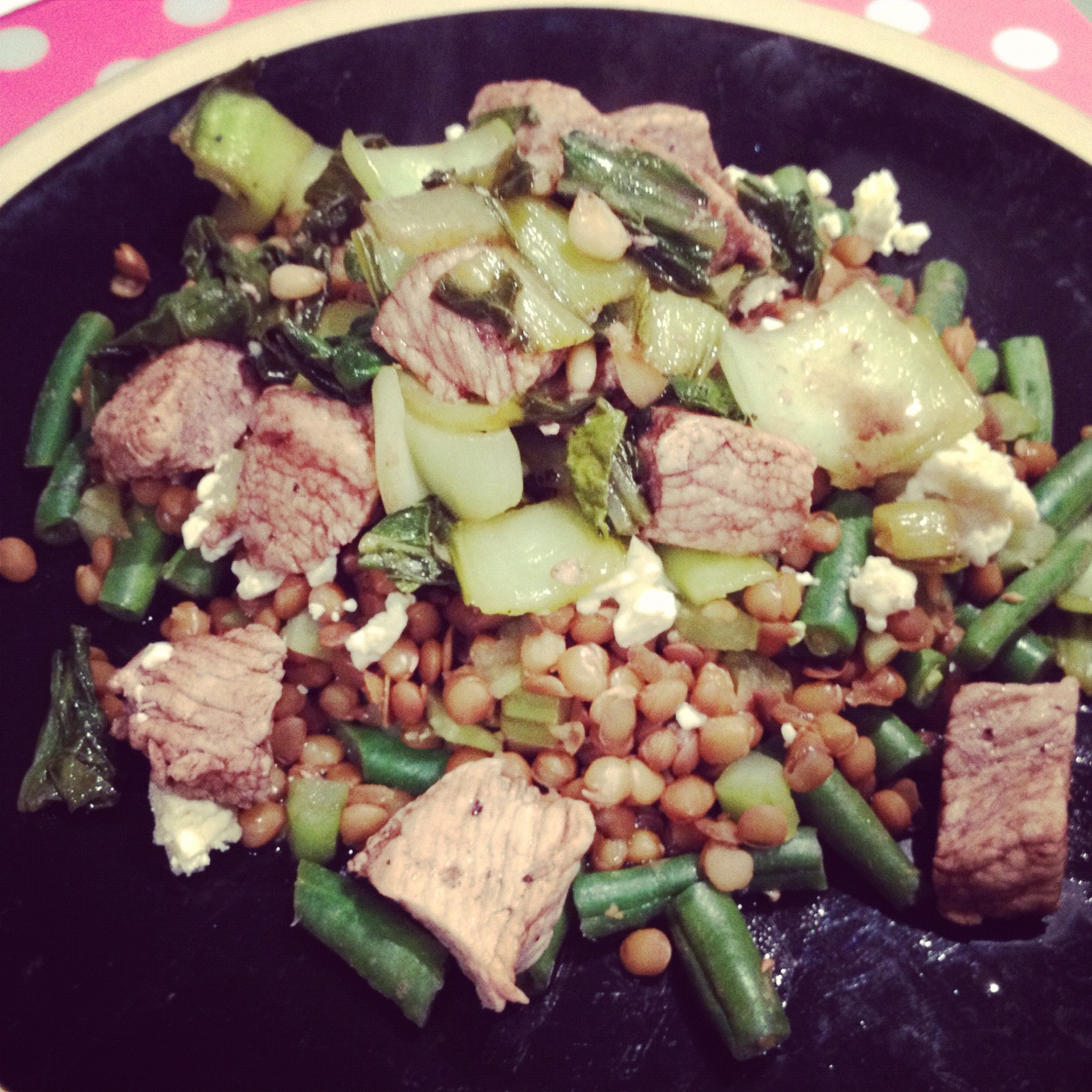
Summer time is a great time to fill up on healthy, delicious salads. I don't believe salads should be the accompaniment to a meal. I believe they should be the meal.
 
When creating nutritionally balanced salads, remember to include these 4 key components:

1. Vegetables/ salad
2. Protein source
3. Low GI carbohydrate
4. Healthy fat


  • Left: Mixed lettuce, beetroot, zucchini, turkey & fetta salad
  • Right: Green beans, bok choy, lean pork, lentil, fetta & pinenut salad
  • Left: Spinach, tomato, capsicum, zucchini, chickpea, fetta & walnut salad
  • Right: Spinach, cucumber, tomato, chickpea, fetta & pepita seed salad
  •  

1. Vegetables/ salad

  • Green - spinach , rocket, lettuce, broccoli, beans, celery, cucumber
  • Orange - pumpkin, carrots
  • Red - capsicum, tomato
  • Yellow - yellow capsicum
  • Purple - beetroot

2. Protein sources

  • Lean chicken
  • Tinned tuna
  • Smoked salmon
  • Boiled eggs
  • Chickpeas (also provide low GI carbohydrate)
  • 4-bean mix (also provide low GI carbohydrate)
  • Fetta

3. Low GI carbohydrates

  • Fruits -  mango, pomegranate, pear, cranberries
  • Quinoa
  • Pearl cous cous
  • Corn
  • Sweet potato
  • Chickpeas (also provide protein)
  • 4-bean mix (also provide protein)

4. Healthy fats

  • Nuts - roasted walnuts, pinenuts, pistachios
  • Avocado
  • Oils - olive oil, rice bran oil
  • Olives

Build your Salad

Now that you've chosen each of the components, it's time to build your salad.

To serve 4, I recommend:
  • 8 cups of salad/ vegetables
  • 2 large chicken breasts/ 3 x 95g tin tuna/ 200g smoked salmon/ 3 boiled eggs/ 1 x 400g tin chickpeas or 4-bean mix/ 180g reduced fat fetta (or mix and match more than one protein source)
  • 2 cups of low GI carbohydrates
  • 1/4 cup nuts/ 1 whole avocado, 1/4 cup oils/ 15 olives
For extra flavour add herbs such as fresh basil or parsley, wholegrain mustard, lemon/ lime juice or balsamic vinegar.

One of my favourite summer salad dressings is balsamic vinegar, olive oil (3 parts balsamic vinegar: 1 part olive oil) and wholegrain mustard.

Thursday, November 29, 2012

Surviving the Christmas Bulge

With less than 4 weeks until Christmas... the silly season has begun. Did you know, on average, Australians put on 0.8-1.5kg over the Christmas period? This blog is packed full of useful tips on surviving the festive season and beating the bulge. So read on for smart food swaps, healthy nibble ideas and ways to incorporate exercise.


Healthy Food Swaps


- Swap regular hommus for skinny hommus (save 140kJ per 2 tbsp)
- Swap water crackers for carrot and cucumber sticks with dips (save 215kJ per 4 crackers)
- Swap potato chips for wholegrain chips (lower GI)
- Swap chocolate for chocolate dipped strawberries (save 944kJ/ 225 cal per 4 squares)
- Swap party pies for tuna sushi (save 398kJ and 5g fat)
 

How many calories in that?


A big reason for weight gain during the holidays is the nibbles that flow at parties. A party pie here, a mini quiche there,chips, dips and crackers and you've blown your calorie bank for the day! Remember we should aim for no more than 1200kJ in total for snacks for the day; either 3 x 400kJ snacks or 2 x 600kJ snacks.
 
High calorie nibbles:
- Handful potato chips 577kJ/ 138 cal
- 4 Jatz crackers with full fat cheddar cheese 750kJ/ 179 cal
- 1 small mince pie 802kJ/ 192 cal
- 1 party pie 539kJ/127 cal
- 2 chocolate Lindt balls 669kJ/ 160 cal

- 1 spring roll 2066kJ/ 495 cal
 
Low calorie nibbles:
- Carrot & celery sticks with 2 tbsp skinny hummus 306kJ/ 73 cal

- 10 cherries 100kJ/ 25 cal
- 20 grapes 335kJ/ 80 cal
- Small punnet strawberries 262kJ/ 63 cal

- 1 vegetable rice paper roll 396kJ/ 95 cal
- Skewers with 1 bocconcini ball and cherry tomato 386kJ/ 92 cal
 

No time for exercise?

 
You may feel like you're too busy to exercise with all the hustle and bustle of Christmas. However, with all the extra food being consumed, it's important to burn the extra calories with some exercise. Try and incorporate some exercise into your festive occasions.


- Game of backyard/ beach cricket
- Walk around the neighbourhood to view Christmas lights
- Swimming in the pool
- Park the car further away from the shops when Christmas shopping


*kJ values sourced from Calorie King

Tuesday, November 20, 2012

What's making news in nutrition this month?

A Black cuppa a day keeps Diabetes Away

Data published in the BMJ Open journal showed the prevalence of Type II Diabetes is lower in countries where black tea consumption is high. Another reason to have a black cuppa... 

The Benefits of Interval Training

More emerging evidence is showing interval training is one of the most effective ways to burn calories, increase your metabolism and improve fitness. A recent study showed doing interval training for 20 minutes 3 x a week was more effective than jogging for 7 hours. In this study the participants did 20 minutes on an exercise bike 3 x a week, doing 8 seconds of fast pace cycling at a level that elevates heart rate and 12 seconds at a moderate, slower pace. 
 

Key findings from Australian Health Survey 

63.4% of adults are overweight or obese, an increase from 61.2% in 2007-08. The average man (18 and over) is 175.6cm tall and weighs 85.9kg. The average woman is 161.8cm tall and weighs 71.1kg. Between 1995 to 2011-12, the average weight increased by 3.9kg for men and 4.1kg for women. On average, men have a waist circumference of 97.9cm while women have a waist circumference of 87.7cm. How do you measure up against the average?

Monday, October 29, 2012

Nutrition for Sports

What's the best diet before, during and after endurance exercise?
 
This post originated because my partner completed a 165km cycle yesterday conquering Canberra's hills in the Fitz's Challenge (Well done Mike!). Being a dietitian, I was interested in ensuring his nutrition and hydration was optimal before, during and after the event. With so many of us training for fun runs, fitness challenges, triathlons and marathons; I thought I'd post about nutrition for sports.  
 

Carbohydrate Loading

  • Who should carbohydrate load?
    • Anyone exercising continuously at a moderate to high intensity for 90 minutes or longer e.g. cycling, marathon running and longer distance triathlon
  • The AIS recommends 1-4 days of exercise taper while following a high carbohydrate diet (7-12g carbohydrate/kg body weight/ day)
    • This is sufficient to elevate muscle glycogen (stored glucose = fuel) and can improve performance by 2-3%
  • For example, a 70kg man needs 490 - 840g carbohydrate to effectively carbohydrate load (equivalent to 32-56 slices of bread)
  • In order to consume this amount of carbohydrate, it is necessary to make use of compact sources of carbohydrate such as sugar, cordial, soft drinks, sports drinks, jam, honey, jelly and tinned fruit

Nutrition Before Sport

  • Carbohydrate breaks down into glucose
    • Glucose = fuel
  • Before sport consume a high carbohydrate, low glycaemic index, low fat, easily digested meal 2-4 hours before
  • Aiming for 1-4g carbohydrate per kg body weight
  • For example, a 70kg man needs 70 - 280g carbohydrate (minimum 4.6 slices bread)
  • The table below has examples of foods containing 30g; so a 70kg man would need to consume at least 2.5 of these options to meet a minimum of 70g carbohydrate
  • An example is 3 weet-bix with milk and a 250ml glass of juice

Nutrition During Sport

  • Sports lasting <1 hour do not threaten fuel stores
  • Sports lasting >1 hour do
  • Foods during sports should be high carbohydrate but high glycaemic index (broken down quickly into glucose to give you energy)
  • Aiming for 30-60g carbohydrate per hour
  • An example of 30-60g carbohydrate = 2 x sports gels, 1L Gatorade, 1 x sports performance bar,  8 snackes/jellies

Nutrition After Sport

  • Key nutrient for recovery = protein
  • Aiming for 10-20g protein
  • Works best when coupled with carbohydrate
  • Eat within 30 minutes
    • The bodies protein synthesis mechanism is working best within this time
  • Good post sport snacks/ meals include eggs on toast, fruit smoothie, liquid meal supplement (e.g. Sustagen sport), Up & Go, sandwich with meat or cheese, glass of milk and almonds, protein shake (if low carbohydrate, consume with piece of fruit/ toast for carbohydrates and protein performance bars
  • The table below has examples of foods containing 10g protein

FYI: Protein in excess of need is oxidised as energy and doesn't have an anabolic effect. The maximum amount of protein the body can utilise is 2g protein/ kg body weight/ day.

Thursday, October 25, 2012

Milking Your Options

Cows, goat, almond, oat, rice, soy... Take one guess what I'm talking about...
 
 
There are so many different varieties of milk on the supermarket shelves. Thanks to my friend for suggesting this blog with the question "is almond milk healthy?" in mind.

One of the most important nutrients in milk is calcium. Fortunately, a lot of milk substitutes are fortified with calcium. Check the label and choose a milk with at least 120mg calcium per 100ml. This  ensures about 300mg per serve (standard serve is 250ml).
 
Milk is also a good source of protein, with regular cow's milk providing about 8g per serve. Almond, soy, rice and oat milks are lower in protein, but protein enriched varieties are available.
 
Almond, soy, rice and oat milks are all naturally lower in fat and calories than regular cows milk, but reduced fat varieties are available if you are watching your weight.

Dietitians Pick for Milk Substitutes:

 
Almond milk
 
A few brands, such as Australia's Own and Sanitarium do not specify the calcium content in the nutrition information panel.
  • Blue Diamond Almond Breeze Original Unsweetened
  • Silk Pure Almond 

Soy milk
  • Vitasoy Lite Soy
  • Sanitarium So Good Lite Soy

Oat milk
  • Vitasoy Original Oat Milk

Rice milk
  • Vitasoy Protein Enriched Rice Milk
 
Almond, soy, oat and rice milk are all great substitutes for cow's milk, particularly if you suffer from lactose intolerance. Just be sure to check the information panel and choose the brand with the most calcium and protein per 100ml, and the least energy/ kilojoules per 100ml.

Monday, October 22, 2012

Recipe Makeovers

Do you have a favourite family recipe? Something that you cook week in and week out? Find out how to give your favourite recipes a  nutritional makeover to make them even healthier.


Ways to modify recipes to make them healthier:

  1. Cut calories by using reduced fat products e.g. skim milk, lite cheese, extra light ricotta and extra light cream
  2. Increase the fibre by switching to wholemeal or wholegrain varieties e.g. brown rice, wholemeal pasta and wholemeal flour
  3. Add more vegies than the recipe calls for
  4. Use lean meats e.g. heart smart mince, skinless chicken breasts and rindless bacon
  5. Replace some of the meat with legumes and lentils to boost fibre
  6. Cut salt by using reduced-salt or no-added-salt products e.g. reduced-salt chicken/ vegetable stock and reduced-salt tomato paste

Recipe Makeovers

Spaghetti Bolognaise

  • Cut calories and increase fibre by replacing 1/2 of the meat with a 400g can brown lentils
  • Use reduced-salt tinned tomatoes rather than bolognaise sauce
  • Add chopped vegies such as carrot and mushrooms
  • Replace white spaghetti with wholemeal spaghetti
Lentil Bolognaise - Healthy Food Guide Recipe


Fried Rice

  • Cut calories by using lean skinless chicken breast and rindless bacon
  • Cut salt by using reduced-salt soy sauce
  • Increase fibre and lower the GI by replacing white jasmine rice with brown rice
  • Add fresh vegies such as carrot, celery and onion
Low Fat Fried Rice - Healthy Food Guide Recipe


Carbonara Pasta

  • Replace cream with either Philadelphia 85% less fat cream for cooking or extra light ricotta
  • Increase fibre by replacing white pasta with wholemeal pasta
  • Cut calories by using rindless bacon
Penne Carbonara - Healthy Food Guide Recipe